Tag: summer

  • How to Keep Your Homestead Animals Cool in the Summer

    How to Keep Your Homestead Animals Cool in the Summer

    How to Keep Your Homestead Animals Cool in the Summer

    keeping-animals-cool07

    It’s important to look after our homestead animals as temperatures soar during the summer months.  Animals are just as susceptible to the effects of exposure as their human counterparts, and this can impact their overall health and productivity.  Let’s take a look at a few simple things that we can all do to help our animals to beat the heat.

    Focus on the Basics

    ildare_852872

    Animals need plenty of cool water for drinking and bathing in order to stave off dehydration and help to regulate body temperatures.  Not only does water consumption increase as temperatures rise, but water can evaporate at a faster rate as well.  Make sure that you periodically check water levels in bowls and dispensers, and refill baths as necessary.  It’s also important to frequently change bathing water in order to prevent it from turning into a breeding ground for disease.

    Make sure that your animals also have access to shady and well-ventilated areas where they can rest during the hottest parts of the day.  Just as hot, sticky air or the intensity of direct sunlight can zap us of our energy and make us miserable, animals are no different.  A little bit of shade and cool air can go a long way with respect to keeping your animals happy and healthy.

    Tips for Chickens

    chicken water dish 2

    Backyard chickens don’t need a lot of attention to keep them happy in the summer heat.  Aside from providing sources of shade, water is the next-best way to keep chickens cool.  Little things like filling a wading pool so they can trot around in cool water or providing a fan in the coop can make all of the difference in the world.  Think about installing a mister that chickens can get under for a quick and refreshing cool-down.

    Watering grass before they walk around or peck for food can also be very helpful.  Finally, try to make sure that their bedding is well-ventilated, and provide them with access to a patch of dry dirt that they can wallow in in order to cool down.

    Suggestions for Rabbits

    keeping-animals-cool05

    You can follow some of the same suggestions to help keep rabbits cool, such as using a mister or providing them with some shade in a well-ventilated area.  Another great idea is put a chunk of ice in their cage that can radiate cool air and give them something to lick or touch from time to time.  Placing ice cubes in their water bottle can also be incredibly-refreshing.  Consider placing a moist towel or cool pad that they can lay on.  Also, don’t forget to brush them frequently to remove excess fur and dander that would otherwise cover the skin and trap heat.  Finally, make sure that you replace their food and give them fresh, cool and crisp vegetables throughout the day.

    Keep in mind that most homestead animals succumb to disease and death from exposure to extreme temperatures.  Follow these tips and learn more about what you can do to protect all of your animals this summer.  A little bit of common sense and attentiveness can go a long way with respect to keeping our animals as cool and comfortable as possible.

    http://101waystosurvive.com/survail_tips/how-to-keep-your-homestead-animals-cool-in-the-summer/

    On – 01 Aug, 2017 By Callon

  • How to Keep Your Homestead Animals Cool in the Summer

    How to Keep Your Homestead Animals Cool in the Summer

    How to Keep Your Homestead Animals Cool in the Summer

    keeping-animals-cool07

    It’s important to look after our homestead animals as temperatures soar during the summer months.  Animals are just as susceptible to the effects of exposure as their human counterparts, and this can impact their overall health and productivity.  Let’s take a look at a few simple things that we can all do to help our animals to beat the heat.

    Focus on the Basics

    ildare_852872

    Animals need plenty of cool water for drinking and bathing in order to stave off dehydration and help to regulate body temperatures.  Not only does water consumption increase as temperatures rise, but water can evaporate at a faster rate as well.  Make sure that you periodically check water levels in bowls and dispensers, and refill baths as necessary.  It’s also important to frequently change bathing water in order to prevent it from turning into a breeding ground for disease.

    Make sure that your animals also have access to shady and well-ventilated areas where they can rest during the hottest parts of the day.  Just as hot, sticky air or the intensity of direct sunlight can zap us of our energy and make us miserable, animals are no different.  A little bit of shade and cool air can go a long way with respect to keeping your animals happy and healthy.

    Tips for Chickens

    chicken water dish 2

    Backyard chickens don’t need a lot of attention to keep them happy in the summer heat.  Aside from providing sources of shade, water is the next-best way to keep chickens cool.  Little things like filling a wading pool so they can trot around in cool water or providing a fan in the coop can make all of the difference in the world.  Think about installing a mister that chickens can get under for a quick and refreshing cool-down.

    Watering grass before they walk around or peck for food can also be very helpful.  Finally, try to make sure that their bedding is well-ventilated, and provide them with access to a patch of dry dirt that they can wallow in in order to cool down.

    Suggestions for Rabbits

    keeping-animals-cool05

    You can follow some of the same suggestions to help keep rabbits cool, such as using a mister or providing them with some shade in a well-ventilated area.  Another great idea is put a chunk of ice in their cage that can radiate cool air and give them something to lick or touch from time to time.  Placing ice cubes in their water bottle can also be incredibly-refreshing.  Consider placing a moist towel or cool pad that they can lay on.  Also, don’t forget to brush them frequently to remove excess fur and dander that would otherwise cover the skin and trap heat.  Finally, make sure that you replace their food and give them fresh, cool and crisp vegetables throughout the day.

    Keep in mind that most homestead animals succumb to disease and death from exposure to extreme temperatures.  Follow these tips and learn more about what you can do to protect all of your animals this summer.  A little bit of common sense and attentiveness can go a long way with respect to keeping our animals as cool and comfortable as possible.

    http://101waystosurvive.com/survail_tips/how-to-keep-your-homestead-animals-cool-in-the-summer/

    On – 01 Aug, 2017 By Callon

  • Stored Snow Makes A Great Alternative To Summer Air Conditioning

    Stored Snow Makes A Great Alternative To Summer Air Conditioning

    S’no joke–Japan and Sweden are already saving their winter snow to cool buildings when the weather heats up, and a new study looks at the possibilities of doing the same in Canada.

    In Stockholm, more than 35 million cubic feet of snow is cleared every winter, and dumped. In 2009, Sweden’s Sundsvall Hospital switched to snow for summer cooling. The technology is simple: You store the snow in an insulated pit and then, when needed, you pump the chilled meltwater out into a system of pipes. Just like pumping hot water through a building to heat it, you can use chilled water to cool it.

    The advantages are many. It’s quiet, it’s more reliable, and it doesn’t require refrigeration units to cool the air. Now researchers at the University of British Columbia think Canada could do the same. “Snow is not a waste, but a resource,” study co-author Kasun Hewage told Popular Science.

    The team’s report, published in the Clean Technologies and Environmental Policy journal, explores the different methods of snow cooling, and compares them to regular air conditioning. In Canada, residential buildings account for 17% of total energy usage, and 15% of greenhouse gas emissions, and this is growing thanks to increased use of air conditioning.

    “Snow storage is an ancient, simple, and low-cost technique and it is feasible in countries like Canada, which has high-energy demands for both cooling and heating during a year,” says the report. Its oldest recorded use was in 1833, where buckets of ice were hung in a South Carolina hospital to cool the building. Eventually, machines were invented to do the cooling instead. Why? Storage. Snow storage took up too much precious space, and nobody cared about cutting energy use a century ago.

    Previous studies have focused on regular snow storage versus air conditioning. This one looks at alternative methods of snow storage. Canada is especially good for this because almost everywhere goes below freezing in the winter, so anyone can harvest and store their own snow and ice. There are four traditional methods of storage: Indoors, and outside either on, in, or under the ground. The study added higher-tech options: Regular, loose storage; watertight storage (which minimizes contaminants and the need for later processing); and high-density storage (HSS), where the snow is compacted.

    The results were surprising. Whereas air conditioning units are the worst in terms of environmental impact, conventional storage (just collecting the loose snow and insulating it) was also fairly damaging, partly because it needs a lot of space, and partly because of the materials used to do it. So too was watertight storage. The best overall method, then, is HSS, where the required space and materials are at a minimum over its lifecycle.

    The conclusion is that snow is a good alternative to regular air-con, as long as your climate supports its use. And even if the environmental impacts were equal, snow is just more pleasant, without noise, hot exhaust, or drying of the indoor air. Best of all, you can even fashion a DIY version, if you are willing to dig a pit, and to hang buckets of ice around the place in summer, that is.

    https://www.fastcompany.com/3065312/stored-snow-makes-a-great-alternative-to-summer-air-conditioning

    On – 04 Nov, 2016 By Charlie Sorrel

  • Transitioning the Vegetable Garden from Spring to Summer

    Transitioning the Vegetable Garden from Spring to Summer

    vegetable garden

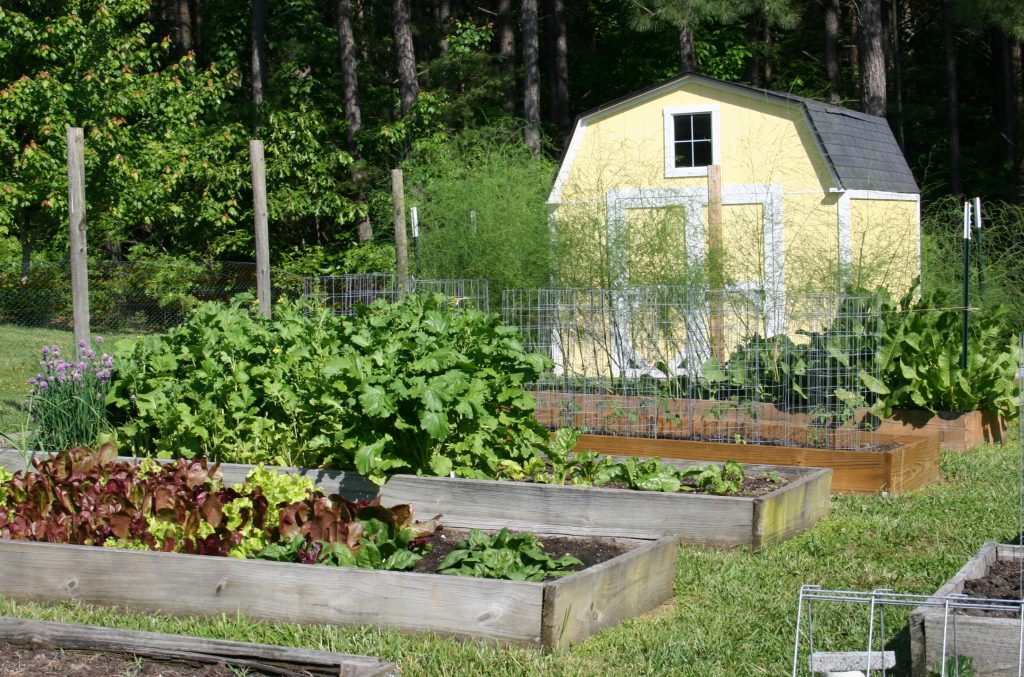
    This is the time of year when I transition the vegetable garden from its spring crops into summertime. It’s the time of year when we never seem to have enough room in the raised beds nor enough time to do all of the work we set out to do in a given day.

    In the vegetable garden, the broccoli rabe is at its peak, and the lettuce is, too. The beets will be ready for harvesting, pickling, and canning in about three weeks or so. Strawberries for jam are just starting to arrive and are protected thanks to the bird netting that keeps my nemesis, the local crow murder, from eating the harvest before I get to them. Peas twin on the Vine Spine Linking Trellis and start just starting to flower. Onions and garlic are maturing and the radishes are almost finished.

    Newly planted carrot and parsnip seeds peek tentatively above the earth. Tomato plants expelled from hothouse splendor now wave from behind the safety of their cages. And waiting on the porch for truly hot weather are the flats of sweet potato plants who need heat and plenty of it to be happy.

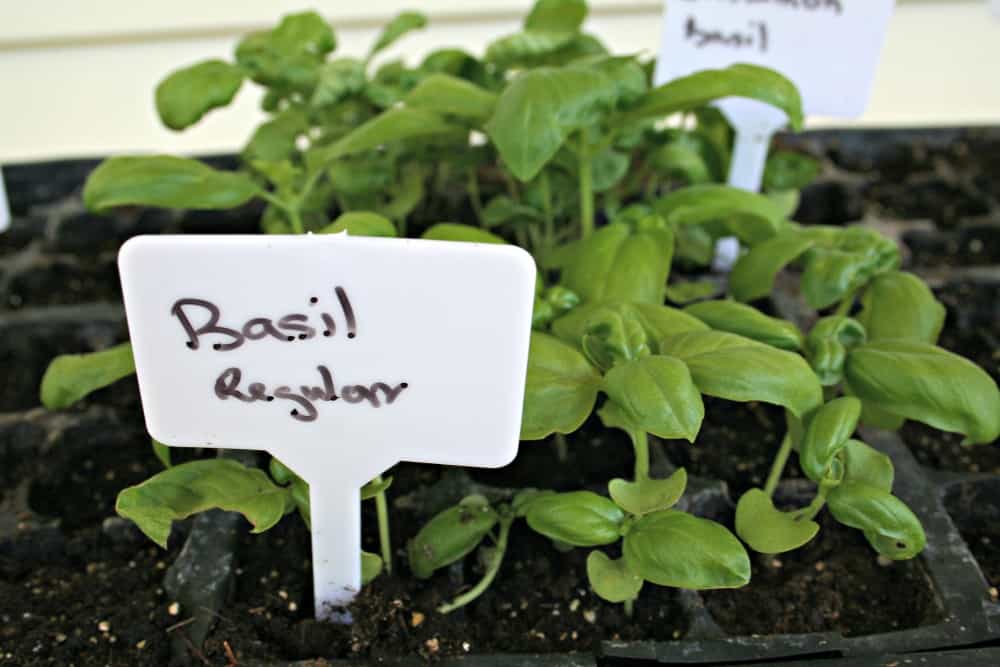
    Among the herb garden plants, the catnip is ready for harvesting, and I’ve already cut and dried another pint of oregano. I have cinnamon and Genovese basil plants ready to set outside and parsley and dill have been moved from the safety of their flats to the garden beds. I mix parsley and dill into the herb garden, the butterfly garden as food for hungry caterpillars, and in the vegetable garden so there is always plenty for us all.

    We’ve been busy weeding all of the flower beds in the perennial garden. It is hot, dirty work. Last year, I got behind in the weeding and the weeds took advantage of my laziness to creep into every nook and cranny among the plants. Hubby and I have worked out a system whereby I week from 7 to 8:30 each morning and then he mulches the area afterward. When we finish the entire garden in about two weeks I will start again, tidying up the areas we’ve already done.

    Our goal this year is to keep the garden in top shape as long as we can. The heat is always a problem and keeps me from gardening longer, but I have learned the hard way that a little sustained daily effort accumulates into success.

    May is a busy month, but I have found time to update the monthly gardening tip sheets available free here at Home Garden Joy. I have also started a new short gardening book that I think you will enjoy! Stay tuned, be sure to join our email list for the latest information, and keep gardening and growing!


    http://homegardenjoy.com/site/2017/05/transitioning-vegetable-garden-spring-summer.html

    On – 18 May, 2017 By Jeanne

  • Planning for summer food – MY FRENCH COUNTRY HOME

    Planning for summer food – MY FRENCH COUNTRY HOME

    planning for summer food

    Apr 11, 2017

    planning for summer food

    fresh vegetables at market


    We’re not in the summer yet, not by a long way, but the spring does seem to be in a hurry to move forward here.  Consequently I’m having to decide very quickly what to plant in our kitchen garden this year.  Since I created the no-dig beds a couple of months ago, I haven’t had time to plant anything, and the only plant showing is the  rhubarb that just refuses to give up.

    We don’t have a big kitchen garden, it’s as much about looking pretty as producing food.  But the few crops that we manage to harvest have to be ideal for summer eating and entertaining.

    That’s why this year I shall be growing a lot of basil for making delicious pesto sauce for our pasta;

    bowl of pesto sauce

    plenty of tomatoes, zucchini and aubergine or eggplant for our stuffed vegetables

    and hopefully this year some coco de Paimpol, or white beans which are quite divine as a summer salad.  They can actually be bought all year around as dry beans, and the recipe below can be adapted to using dry beans in case you don’t have the possibility or indeed the wish to grow them yourself.

    coco de paimpol beans in salad

    To make a salad of Coco beans for four people as a main dish or for eight people as a small appetiser with a glass of rosé before the meal, you will need:

    350 g / fresh white beans preferably the variety Cocos de Paimpol

    one onion with a clove inserted for cooking

    one finely chopped onion (I prefer to use a violet onion)

    sprig of thyme

    3 large spoons of olive oil

    2 spoons of balsamic vinegar

    Cover the freshly shelled beans with cold water, and drop the onion with the clove and the sprig of thyme into the water  Bring to the boil and simmer for about 25 minutes or until the beans are just tender.

    Strain, rinse in cold water and leave to cool.   Chop the violet onion finely, and prepare the vinaigrette then pour the beans into a deep salad bowl and add the onion and vinaigrette with a little chopped chives or basil to taste.  Some people like to add some small cherry tomatoes cut in half, but the beans are delicious without.

    All this beautiful food was prepared and shot at the Château de Moissac, photos by Franck Schmitt for the book My Stylish French Girlfriends.


          •

    http://sharonsantoni.com/2017/04/31027/

    On – 11 Apr, 2017 By

  • 3 Energy-Saving Central Air Alternatives

    3 Energy-Saving Central Air Alternatives


    You can give your air conditioner a well-deserved break and lower your energy bills by considering other ways to keep the heat of summer from sweating your brow. The U.S. Department of Energy says alternatives such as energy-efficient windows and doors, shading and natural ventilation can help cool your home with less energy use.

    Window coverings

    During summer, keep window coverings closed in the daytime to block the sun’s heat. Consider window awnings or roll-down shades for the outside of the home that can be operated by remote control. Choose manufactured shades or blinds that are labeled blackout, or have reflective backing.

    Fans

    A good way to help your air conditioner is to run ceiling fans at the same time. They will circulate the cool air, allowing you to turn down the air conditioner. Installed on the ceiling between the attic and living space, a whole house fan can meet your home cooling needs by pulling in air from open windows and exhausting it through the attic and roof.

    Central air conditioning alternatives

    Consider room air conditioners and ductless mini-split air conditioners. Both provide the flexibility of being able to cool individual rooms. Dehumidifying heat pipes allow an air conditioner to dehumidify better while still cooling the air, making them ideal for hot, humid environments.

    So, stop relying on just your air conditioner to keep you cool. Alternatives can help you stay comfortable and reward you with cheaper electric bills.


    http://coldwellbankerapps.com/wordpress/3-energy-saving-central-air-alternatives/

    On – 07 Jul, 2017 By Blog Team

Malcare WordPress Security