Your cart is currently empty!
Series: Best Climate Regional Specific Books
-

Food from Dryland Gardens: An Ecological, Nutritional and Social Approach to Small-Scale Household Food Production
Food from Dryland Gardens encourages gardens that serve local needs, that are based on local knowledge, and that conserve natural resources and the biological diversity of traditional crops. It was written for field workers, extension agents, students, project workers, and program planners. Both a beginner’s guide and a reference for those with more experience, this…;

Center for PeoplePrice:
$25.00$13.50
Food from Dryland Gardens encourages gardens that serve local needs, that are based on local knowledge, and that conserve natural resources and the biological diversity of traditional crops. It was written for field workers, extension agents, students, project workers, and program planners. Both a beginner’s guide and a reference for those with more experience, this book helps the reader observe and work with local people to ask appropriate questions about the community, the environment, and the potential for gardens to improve nutritional, economic, and social well-being.Used Book in Good Condition
Full Customer Reviews:
-

Gardening in the Coastal South
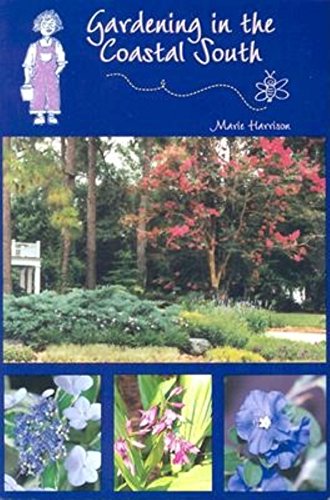
Take a stroll through the garden of a self-confessed hortimaniac. Gardening is Marie Harrison’s avocation, passion…some might say, obsession. In her personal, witty style (she refers to her husband as Amiable Spouse, or A.S. for short), Marie divulges her own tried-and-true ways of gardening along the coasts of the southeast United States. Marie covers perennials,…;
Pineapple PressPrice:
$14.95$5.68
Take a stroll through the garden of a self-confessed hortimaniac. Gardening is Marie Harrison’s avocation, passion…some might say, obsession. In her personal, witty style (she refers to her husband as Amiable Spouse, or A.S. for short), Marie divulges her own tried-and-true ways of gardening along the coasts of the southeast United States. Marie covers perennials, flowers grown from bulbs, herbs, shrubs and small trees, vines, edible flowers, and herbs for flower borders. A section of full-color photos captures these beautiful plants and flowers in all their vibrant glory. Charming pen-and-ink illustrations are sprinkled throughout the text. Marie discusses the edible and medicinal properties of various plants (there’s even a quick or two!), as well as coastal considerations such as salt tolerance; environmental issues such as pesticide use, beneficial insects, and exotic invasives; and gardening for birds and butterflies. She also offers her musings on the seasons in Florida and how she spends her time in the garden during each phase of the year. Whether you’re seasoned gardener like Marie or a tentative beginner just starting out with a windowsill herb garden, this delightful book will make you appreciate the dirt under your fingernails.
Full Customer Reviews:
-

The Timber Press Guide to Vegetable Gardening in the Pacific Northwest (Regional Vegetable Gardening Series)
There is nothing more regionally specific than vegetable gardening. What to plant, when to plant it, and when to harvest are unique decisions based on climate, weather, and first and last frost.The Timber Press Guide to Vegetable Gardening: Pacific Northwest is a growing guide that truly understands the unique eccentricities of the Northwest growing calendar,…;

Timber PressPrice:
$19.95$19.93 Free Shipping
Used Book in Good ConditionThere is nothing more regionally specific than vegetable gardening. What to plant, when to plant it, and when to harvest are unique decisions based on climate, weather, and first and last frost.
The Timber Press Guide to Vegetable Gardening: Pacific Northwest is a growing guide that truly understands the unique eccentricities of the Northwest growing calendar, covering Oregon, Washington, southeastern Alaska, and British Columbia. The month-by-month format makes it perfect for beginners and accessible to everyone—you can start gardening the month you pick it up. Starting in January? The guide will show you how to make a seed order, plan crop rotations and succession plantings, and plant a crop of microgreens. No time to start until July? You can start planting beets, carrots, chard, kale, parsnips, and spinach for an early fall harvest.
Full Customer Reviews:
-

Timber Press Guide to Vegetable Gardening in the Southwest (Regional Vegetable Gardening Series)
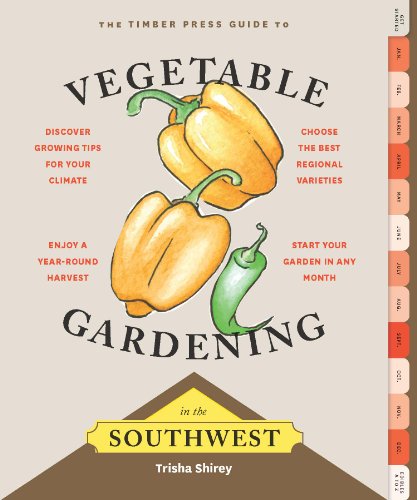
There is nothing more regionally specific than vegetable gardening—what to plant, when to plant it, and when to harvest are decisions based on climate, weather, and first frost. The Timber Press Guide to Vegetable Gardening in the Southwest, by regional expert Trisha Shirey, focuses on the unique eccentricities of the Southwest gardening calendar, which include…;
Timber PressPrice:
$19.95$18.38 Free Shipping
There is nothing more regionally specific than vegetable gardening—what to plant, when to plant it, and when to harvest are decisions based on climate, weather, and first frost. The Timber Press Guide to Vegetable Gardening in the Southwest, by regional expert Trisha Shirey, focuses on the unique eccentricities of the Southwest gardening calendar, which include extreme temperatures and low rainfall. The month-by-month format makes it perfect for beginners and accessible to everyone— gardeners can start gardening the month they pick it up. Perfect for home gardeners in Arizona, Nevada, New Mexico, Oklahoma, Texas, Utah, eastern California, and southern Colorado.
Full Customer Reviews:
-

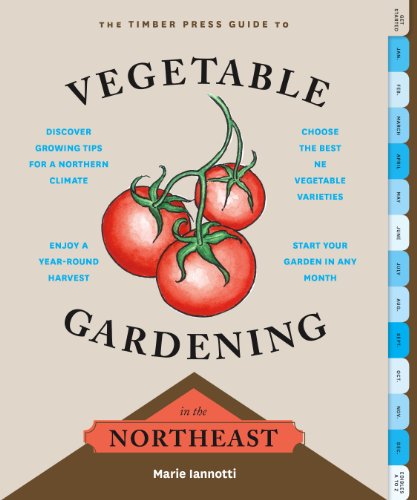
The Timber Press Guide to Vegetable Gardening in the Northeast (Regional Vegetable Gardening Series)
Growing vegetables requires regionally specific information—what to plant, when to plant it, and when to harvest are based on climate, weather, and first frost. The Timber Press Guide to Vegetable Gardening in the Northeast tackles this need head on, with regionally specific growing information written by local gardening expert, Marie Iannotti. This region includes Connecticut,…;
Timber PressPrice:
$19.95$15.95 Free Shipping
Growing vegetables requires regionally specific information—what to plant, when to plant it, and when to harvest are based on climate, weather, and first frost. The Timber Press Guide to Vegetable Gardening in the Northeast tackles this need head on, with regionally specific growing information written by local gardening expert, Marie Iannotti. This region includes Connecticut, Delaware, Maine, Massachusetts, New Hampshire, New Jersey, New York, Pennsylvania, Rhode Island, and Vermont. The southernmost parts of Ontario, New Brunswick, Novia Scotia, and Quebec are also included.
Monthly planting guides show exactly what you can do in the garden from January through December. The skill sets go beyond the basics with tutorials on seed saving, worm bins, and more.
Full Customer Reviews:
-

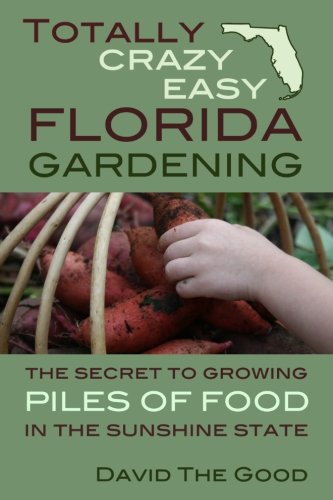
Totally Crazy Easy Florida Gardening: The Secret to Growing Piles of Food in the Sunshine State
Are you tired of failing at your Florida gardening? Are stink bugs puncturing your tomatoes and nematodes gnawing your eggplants? Is the sand eating your compost like an RV swallows gas? Fear not! You CAN grow buckets upon buckets of food in Florida – and this book gives you the secrets to pulling it off…;
CreateSpace Independent Publishing PlatformPrice: $11.99 Free Shipping
Are you tired of failing at your Florida gardening? Are stink bugs puncturing your tomatoes and nematodes gnawing your eggplants? Is the sand eating your compost like an RV swallows gas? Fear not! You CAN grow buckets upon buckets of food in Florida – and this book gives you the secrets to pulling it off year after year. Lots more food – for a lot less work! Whether you want to save money, feed your family, start a survival garden, garden year-round, go paleo or build a huge prepper garden, this is the book for you. Learn the cheap simple techniques that will kickstart your Florida gardening. Discover the crops that will always come through for you. Quit hating the sand and the bugs and start reaping abundant harvests like you’ve never had before! This book provides the answers for both beginners and experts, delivered with humor. If you want yet another boring gardening book – this isn’t it. Through combining Back to Eden gardening, Square Foot Gardening, Biointensive gardening, container gardening and some of the most productive crops on the planet, you WILL succeed! This is easy Florida gardening like you’ve never seen before. Pick up a copy of Totally Crazy Easy Florida Gardening and turn your backyard patch of weeds and sand into a money-saving vegetable factory that will keep your family fed no matter what the economy does. Start gardening RIGHT NOW before it’s too late! Expert Florida gardener David The Good shares how in Totally Crazy Easy Florida Gardening.
Full Customer Reviews:
-

A Georgia Food Forest: 180 Perennial Edible Plants and a Design Guide for the Zone 8 Home Grower
Create your own Food Forest anywhere in USDA Climate zone 8! Inspired by Dave Jacke’s Edible Forest Gardens but narrowing it down to USDA zone 8, A Georgia Food Forest is a permaculture-oriented illustrated guide for planning your own food forest of perennial fruit, nut and berry vines, bushes, trees, vegetables and herbs that work…;

Cynthia DillPrice: Free
Create your own Food Forest anywhere in USDA Climate zone 8! Inspired by Dave Jacke’s Edible Forest Gardens but narrowing it down to USDA zone 8, A Georgia Food Forest is a permaculture-oriented illustrated guide for planning your own food forest of perennial fruit, nut and berry vines, bushes, trees, vegetables and herbs that work in USDA climate zone 8. The 128-page book includes descriptions of 180 perennial food-bearing trees and plants (along with the authors own black-and-white drawings to help you recognize many of them) and additional herbs, along with recommended varieties from the authors own personal experience planting and growing as well as tapping into other information from experts/grower/gardeners in this climate zone. Recommended zone 8 Varieties, typical yield and size, lifespan, special planting and care needs, how pollinated, etc. are included for major plants. Besides the plant variety detail, the author also provides a guide for how to plan your own food forest, taking into account irrigation, layout (crown diameters, mowing, shade, etc), access for vehicles, etc.and also includes drawings of designs of a couple of local food forests with a process for laying out the design by layers using easily-available materials.
Full Customer Reviews:
-

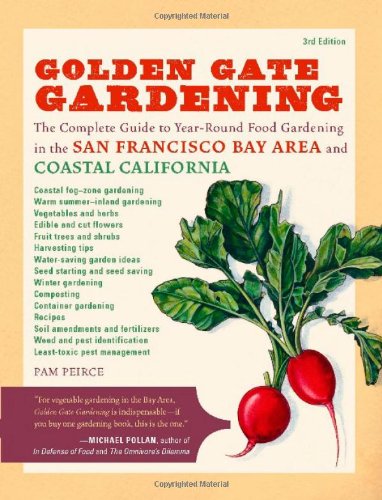
Golden Gate Gardening, 3rd Edition: The Complete Guide to Year-Round Food Gardening in the San Francisco Bay Area & Coastal California
The bible of vegetable gardening in the San Francisco Bay Area has been revised and updated! Packed with more than 400 pages of reliable information, Golden Gate Gardenin offers encyclopedic coverage of gardening principles and practices specific to the Bay Area and the Northern California coast. Author Pam Peirce explains strategies for growing common favorite…;
Sasquatch BooksPrice:
$29.95$26.26 Free Shipping
The bible of vegetable gardening in the San Francisco Bay Area has been revised and updated! Packed with more than 400 pages of reliable information, Golden Gate Gardenin offers encyclopedic coverage of gardening principles and practices specific to the Bay Area and the Northern California coast. Author Pam Peirce explains strategies for growing common favorite vegetables and herbs, plus unusual ones that bring variety to the garden. She includes information on organizing a garden, dealing with pests, assessing a microclimate, cultivating fruit trees, gardening on a rooftop, harvesting the crop, and creating delicious gardener’s dishes. This third edition also contains new or updated information on resources for specific seeds, tomato planting, organic gardening, and vegetables not included in previous editions, including amaranth, shell beans, Chinese broccoli, broccoli raab, Florence fennel, oca, okra, and quinoa. Charts, sidebars, maps, and online resources help make the vegetable gardening experience easier and more fun.Used Book in Good Condition
Full Customer Reviews:
-

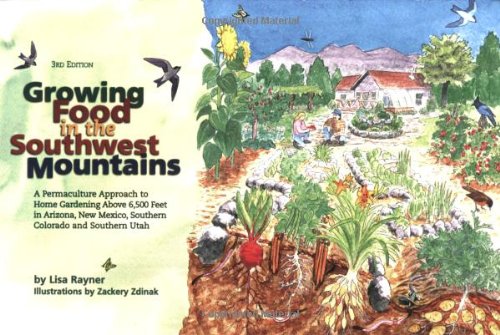
Growing food in the southwest mountains: A permaculture approach to home gardening above 6,500 feet in Arizona, New Mexico, southern Colorado and southern Utah 3rd edition
This book is now also available in a greatly expanded Fourth Edition. See separate listing: Growing Food in the Southwest Mountains – A guide to high altitude, semi-arid home permaculture gardens. 4th Edition (2013) Whether you are a weekend gardener who has never heard of permaculture, or an avid gardener using the permaculture approach, this…;
LifeweaverPrice: Free
This book is now also available in a greatly expanded Fourth Edition. See separate listing: Growing Food in the Southwest Mountains – A guide to high altitude, semi-arid home permaculture gardens. 4th Edition (2013)
Whether you are a weekend gardener who has never heard of permaculture, or an avid gardener using the permaculture approach, this book will help you grow food under the most challenging of circumstances. This book will teach you how to deal with dry weather, high winds, intense sunlight, cold nights, insect pests, and other challenges of gardening in the southwest mountains.
Includes beautiful illustrations by Zackery Zdinak as well as a planting timetable, glossary of lesser known food crops, and an extensive list of resources for gardeners. “Growing Food in the Southwest Mountains” will help you deal with local gardening challenges: Clay, sand and volcanic cinder soils that are very low in organic matter. A yearly average precipitation range of 18 to 25 inches (or less in drought years!).
Our high altitude provides us with strong sunlight, cold winters and large day-night temperature swings. Windy weather, especially during our spring and fall dry seasons. A number of local “pest” animals, birds and insects.
“If every region in North America had a handbook like this, we would be seven leagues ahead of where we now are in Permaculture education. The author and publishers are to be commended for creating a first-class resource.”
— Cathy Holt, The Permaculture Activist magazine, Winter 2002/2003
“Lisa Rayner’s new edition of this little masterpiece provides you with principles for living and eating in harmony with northern Arizona’s natural habitats. It is a primer on how to change our food production and consumption strategies to sustain the natural and cultural heritage of our region.”
— Dr. Gary Paul Nabhan, Author of “Coming Home to Eat: The Pleasures and Politics of Local Foods.” (From the preface to “Growing Food in the Southwest Mountains.”)128 Pages. Printed on Recycled Paper. Made in USA
3rd Edition published in 2002. (See separate listing for updated and expanded 4th edition.)
Original illustrations by Zackery Zdinak
Extensive list of resources for gardeners.
An excellent guide for growing food at high altitude in arid climates.
Full Customer Reviews:
-

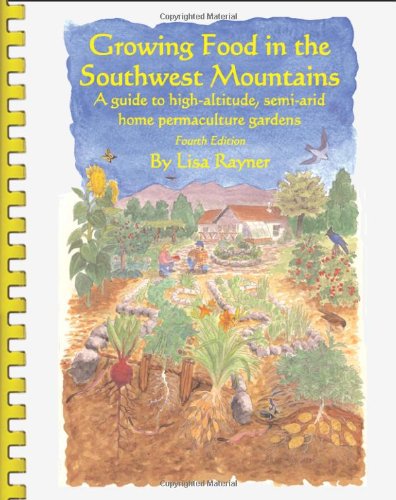
Growing Food in the Southwest Mountains – A guide to high altitude, semi-arid home permaculture gardens. 4th Edition (2013)
“Growing Food in the Southwest Mountains” will teach you how to garden in dry weather, high winds, intense sunlight, cold nights, summer heat, poor soil, insect pests, weeds and other challenges of the high elevation Southwest. Contains more than four times the information in the 3rd edition. Includes:Information applicable to an expanded geographical range including…;
Lifeweaver LLCPrice: Free
“Growing Food in the Southwest Mountains” will teach you how to garden in dry weather, high winds, intense sunlight, cold nights, summer heat, poor soil, insect pests, weeds and other challenges of the high elevation Southwest. Contains more than four times the information in the 3rd edition. Includes:
- Information applicable to an expanded geographical range including the highlands of Arizona, New Mexico, Colorado, Utah, Nevada and California.
- An expanded list of fruit, herbs, vegetables, beans, nuts and seeds with detailed planting information on water, sun and soil needs, USDA zones, pollination requirements and more.
- A thorough look at how climate change is altering gardening at high elevations in the Southwest.
- Why we need to recreate local food systems in an era of climate change and resource depletion.
- An expanded description of permaculture garden design for our bioregion including a new chapter on creating plant guild ecosystems in harmony with your local wild ecosystems and wildlife. Learn how to attract native pollinators and other beneficial insects and birds to your garden while keeping out garden pests.
- Expanded chapters on improving local soils, rainwater harvesting, greywater reuse, xeriscaping TM and other efficient garden watering methods.
- The new final chapter contains a brief history of Southwestern gathering, horticultural, agricultural and food traditions of Native Americans and European-American settlers.
- Appendices include glossaries of food plants and ingredient substitutions using foods that can be grown locally, and a large resource section of books, catalogs, magazines, DVDs, arboretums and permaculture institutes.
- For the first time the book includes an index.
- Hundreds of black-and-white drawings.
- Color maps of USDA Plant Hardiness Zones and Forest Ecosystem Communities of the Southwest.
- 8 ½ x 11 inches. Comb binding.
- Printed in Flagstaff, Ariz. (USA) on 100% recycled paper.
Lisa Rayner is an award-winning local foods activist and the author of four food-related books. Her books are known for being thoroughly researched, expertly written and lavishly illustrated. (For much more about Lisa Rayner, see Amazon’s Lisa Rayner page.)
“Lisa Rayner’s book removes much of the mystery and guesswork involved in the endeavor of growing food in these harsh and, at times, unforgiving climates. Lisa draws from her extensive background in ecology and permaculture to create a holistic approach to gardening. The book contains critical information on microclimates and soils and on selecting appropriate species and varieties that are adapted to high elevations and short growing seasons.
She also incorporates helpful information on the history of growing food in the Southwest, describes guilds of species that create thriving forest gardens, and recommends appropriate times to plant your seeds and starts.
The appendices, which include a list of food substitutes, a glossary of food crops, and several pages of additional resources are well worth the price of the book. I highly recommend this book for anyone in the Southwest Mountains who is serious about growing their own food.”
— Judith D. Springer
Co-editor of Field Guide to Forest & Mountain Plants of Northern Arizona“… a remarkably thorough and carefully assembled handbook for the home gardener in these challenging environments.
There is excellent material on the political and economic imperatives for local food production, climate and microclimate, plants, soils, water management, garden pests, seeds, composting and basic garden layout.
… [Lisa Rayner] has delved deeply into the synergistic implications of climate – including climate change – topography, transportation, demographics, microclimates, and much more…
The book should be a first go-to reference for sustainable food system designers, home gardeners, and permaculture designers in the mountain Southwest.”
–Peter Bane, Permaculture Activist Magazine
Full Customer Reviews:
-

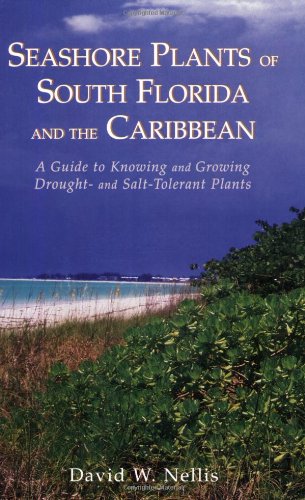
Seashore Plants of South Florida and the Caribbean: A Guide to Identification and Propagation of Xeriscape Plants
For backyard gardeners or serious naturalists alike. A complete source for information about which plants grow best in nearshore environments. Characteristics of each plant, including form, flower and fruit date, geographic distribution, habitat, reproduction, and propagation. Ornamental, medicinal, toxic, physical, edible, and ecological aspects of each plant, covering modern uses and folkloric beliefs.Great Book on…;
Pineapple PrPrice:
$16.95$5.82
For backyard gardeners or serious naturalists alike. A complete source for information about which plants grow best in nearshore environments. Characteristics of each plant, including form, flower and fruit date, geographic distribution, habitat, reproduction, and propagation. Ornamental, medicinal, toxic, physical, edible, and ecological aspects of each plant, covering modern uses and folkloric beliefs.Great Book on Native Plants to Florida
Salt Tolerant Plants by the water
Keys to growing Drought and Salt Tolerant Plants
Full Customer Reviews:
-

Alternative Crops for Drylands: Proactively Adapting to Climate Change and Water Shortages
www.cropsfordrylands.com Alternative Crops for Drylands: Proactively Adapting to Climate Change and Water Shortages is a new book that delves into the earth’s smorgasbord of underappreciated edible plants native to the often waterless corners of the world. Research and development should be poured into these plants now, before climate change contributes further to the worldwide spread…;

Amaigabe PressPrice: Free
www.cropsfordrylands.com Alternative Crops for Drylands: Proactively Adapting to Climate Change and Water Shortages is a new book that delves into the earth’s smorgasbord of underappreciated edible plants native to the often waterless corners of the world. Research and development should be poured into these plants now, before climate change contributes further to the worldwide spread of deserts. The growing global water crisis has contributed to the depletion of ancient water reserves known as aquifers, dried up rivers and lakes, and to 1.1 billion people not having access to safe drinking water. Worldwide, irrigation accounts for about 70% of freshwater usage. In order to drastically reduce water consumption, the global food supply will need to become much more waterwise. Improved cultivation techniques and technologies are central to this end. Yet, the development of new crop species taken from the wild is equally as important. Certain wild plants such as the South African Marula tree, for example, may yield multiple tons of a nut crop and fruit crop from the same tree in a single year, while requiring no irrigation. The purpose of Alternative Crops for Drylands is to provide a botanical arsenal for combating deforestation & desertification, healing parched landscapes, and simultaneously creating fecund, edible oases in place of today’s degraded landscapes. As such, the book highlights about 70 useful plant species, and discusses their cultural & climatic requirements, native habitats, uses, nutrition, and even propagation requirements. At 324 pages in length, Alternative Crops for Drylands is a unique and useful reference book presented with over 80 full color photographs illustrating the book’s featured plants. The book is technical enough to interest professionals, yet is not too complex for the amateur grower. https://www.youtube.com/watch?v=6dmrrcbNSxo
Full Customer Reviews:
-

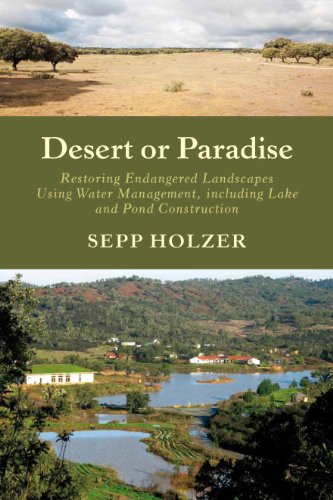
Desert or Paradise: Restoring Endangered Landscapes Using Water Management, Including Lake and Pond Construction
Sepp Holzer farms steep mountainsides in Austria 5,000 feet above sea level. His farm is an intricate network of terraces, raised beds, ponds, and waterways, well covered with productive fruit trees and other vegetation, in dramatic contrast to his neighbors’ spruce monocultures. Fans of Sepp Holzer have come from all over the world to see…;
Chelsea Green PublishingPrice:
$29.95$23.28 Free Shipping
Sepp Holzer farms steep mountainsides in Austria 5,000 feet above sea level. His farm is an intricate network of terraces, raised beds, ponds, and waterways, well covered with productive fruit trees and other vegetation, in dramatic contrast to his neighbors’ spruce monocultures. Fans of Sepp Holzer have come from all over the world to see the productivity of his farm, a veritable permaculture paradise. His first book, Sepp Holzer’s Permaculture, offers a detailed guide to what Holzer has achieved on his farm. Many readers might have wondered-but how can we achieve this on a global scale? Luckily, his newest book, Desert or Paradise, examines Holzer’s core philosophy for increasing food production, earth health, and reconnecting mankind with nature, applied to reforestation and water conservation across the world.
Through years of consultation with other countries, Holzer has developed a core philosophy for reconnecting mankind with nature even in arid or otherwise “lost-cause” regions. He details a process he calls “Grundierung,” a term from painting meaning “base coat,” which goes into great detail the importance of water, and Desert or Paradise offers his concept and guide to construction of large water reservoirs in arid, rainfall-dependent regions with examples from Greece, Turkey, Spain, and Portugal. Holzer describes the ecological and economic benefits of these changes, as well as the use of a variety of plant and animal species for further integration and regeneration of the surrounding areas, including reasons for reforestation and the cause and use of forest fires.
Holzer also outlines his ten points of sustainable self-reliance and how these methods can help feed the world, such as the need to regulate the water budget, eliminate factory livestock farming, bring more fallow or unused areas into production, enlarge crop areas by using terracing and Holzer-style raised beds, regionalize instead of globalize, fight for land reform and engage in community building, go back to the ancient farming wisdom, and change the educational system. Also included are Holzer’s ideas on beekeeping, humane slaughtering, nature spirits, the loss of roots in our society in general, and in politics especially.
Full Customer Reviews: