Your cart is currently empty!
Category: [07-Various]
Various things of benefits that don;t really fit only in one other place
-

Teaming with Fungi: The Organic Grower’s Guide to Mycorrhizae (Science for Gardeners)
From the bestselling author of Teaming with Microbes and Teaming with Nutrients Teaming with Fungi is an important guide to mycorrhizae and the role they play in agriculture, horticulture, and hydroponics. Almost every plant in a garden forms a relationship with fungi, and many plants would not exist without their fungal partners. By better understanding this relationship, gardeners…;
Timber PressPrice:
$24.95$16.96 Free Shipping
From the bestselling author of Teaming with Microbes and Teaming with NutrientsTimber Press
Teaming with Fungi is an important guide to mycorrhizae and the role they play in agriculture, horticulture, and hydroponics. Almost every plant in a garden forms a relationship with fungi, and many plants would not exist without their fungal partners. By better understanding this relationship, gardeners can take advantage of the benefits of fungi, which include an increased uptake in nutrients, resistance to drought, earlier fruiting, and more. Learn how the fungi interact with plants and how to best to employ them in your home garden.
Full Customer Reviews:
-

Ending Hunger Is Within Our Grasp
By Catherine Bertini, distinguished fellow at the Chicago Council on Global Affairs, writing as part of an ongoing expert blog series on FarmingFirst.org.
After years of incremental progress in the fight against poverty and malnutrition, eradicating hunger is now within our grasp. The world is changing, and we face growing challenges and new risks — but we’ve also never been as well prepared to meet these challenges. Ending hunger will require action, engagement, commitment, and collaboration from all sectors, across generations, and from every corner of the world.
At the Chicago Council on Global Affairs’ Global Food Security Symposium in Washington, DC on March 29 and 30, top visionaries from every sector will gather to generate the productive dialogue and actions necessary to ensure strides in global food security and agricultural development. At the event, the Council will release its new report, Stability in the 21st Century: Global Food Security for Peace and Prosperity, which outlines the progress that’s been made to advance food and nutrition security, emerging challenges, and strategies for engagement by national governments, the private sector, and the United States.
The progress is clear: since 1990 global hunger and extreme poverty have fallen significantly, and agricultural production has, on average, doubled. The world is less poor, less hungry, and healthier than it was just a few decades ago.
Advancing food security promotes national security interests, as hunger and unstable food prices can spur unrest and instability, sometimes with widespread ramifications. Investments in agricultural development and food security can transform economies, building new markets locally, nationally, regionally, and globally.
But challenges remain, and new risks are emerging — which we must be prepared to meet. Even with the gains we’ve made, nearly 800 million people are still chronically hungry, and over 700 million live in extreme poverty. Gains in agricultural production have occurred unevenly — in fact, some countries have seen their productivity decline in recent years. Increasingly urban populations and the growing demographic youth bulge put new pressures on global food systems, and volatile weather patterns and natural resource pressures will test our ability to meet growing demand for food safely and sustainably.

See more at Farming First Meeting these challenges means we must fully leverage research and development in order to respond, whether on the farm or throughout the supply chain. The expertise and knowledge from national and global research institutions, from universities to the CGIAR system, must reach and equip producers within low-income countries’ agricultural systems. The power of the private sector must also be unleashed to meet these challenges, as new platforms for cross-sectoral collaboration bring its strengths to the forefront of the fight against hunger. Innovations in investment and finance have the potential to unlock impact and finance at scale — and they must, as the world’s farmers face an estimated $200 billion gap in unmet financing. Strong leadership by policymakers will also be essential, including those in donor countries, like the United Kingdom’s Department for International Development (DFID) and the United States Agency for International Development (USAID), as well as in rising global powers and within low-income countries.
Importantly, these efforts will require the commitment, innovation, and expertise of the next generation of leaders, who will drive progress forward. As youth populations continue to grow rapidly in emerging economies, they can make tremendous contributions to development, including in agriculture and the broader food system.
https://medium.com/media/b17090a53969f4cf52454f56dd2a0b80/href
The Council’s Symposium will highlight the voices and expertise of this next generation of leaders in agriculture, food security, and nutrition. 20 exceptional students from Australia, Brazil, Canada, Honduras, India, Nigeria, Tanzania, Thailand, Uganda, and the United States comprise the Global Food Security Symposium 2017 Next Generation Delegation. Students from around the world will also join us digitally as Social Media Ambassadors, promoting engagement online and bringing their voices to the digital discussion surrounding the event.
I hope that you will add your voice to this important discussion. Watch for the release of the new report, Stability in the 21st Century, on March 30. And, tune into the symposium livestream on March 29 and 30 and share your questions and observations for panelists via Twitter, using #GlobalAg.
The continued existence of hunger and malnutrition defies logic in an age of progress and modernity. We need everyone at the table to solve problems and innovate — across geographies, generations, and disciplines — so please do your part to shape the dialogue by joining the conversation on this critical issue. Together, we can end hunger, once and for all.
This article was first published by Farming First as part of a partnership ahead of the Chicago Council on Global Affairs Global Food Security Symposium.
-

Why We Put a Fence Around Our Farm Data
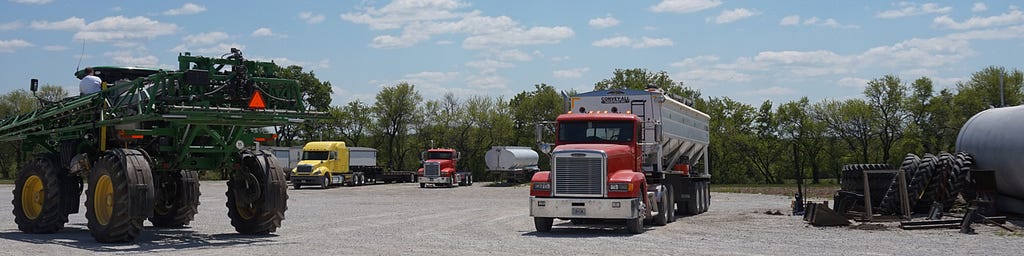
Editor’s Note: This post was contributed by David Seba, a grower in Cleveland, MO. In partnership with his brother, Harold, Seba Bros. Farms, Inc., produces commercial and food grade grains and forage crops. The Seba’s farming and land management philosophy is built on collaboration, stewardship, conservation and deploying the latest technologies in farm data, precision ag and seed genetics.
If you had asked my brother, Harold, and I about our digital strategy five years ago we would’ve said, “We have one; we just aren’t sure what it is.”
The truth is we collected a lot of data over the years, but never felt confident about either the data’s integrity or the platform that was collecting it. With our equipment manufacturers, it seems like it was more about buying additional hardware than getting us better, more complete data.
It seems the major manufacturers get on the hardware train, but never get you to your destination. That is, they require you to buy the next, newest technology that keeps extending your trip. So, you never really arrive with one digital strategy. All the while, you end up collecting data for them that doesn’t bring value back to your farm.
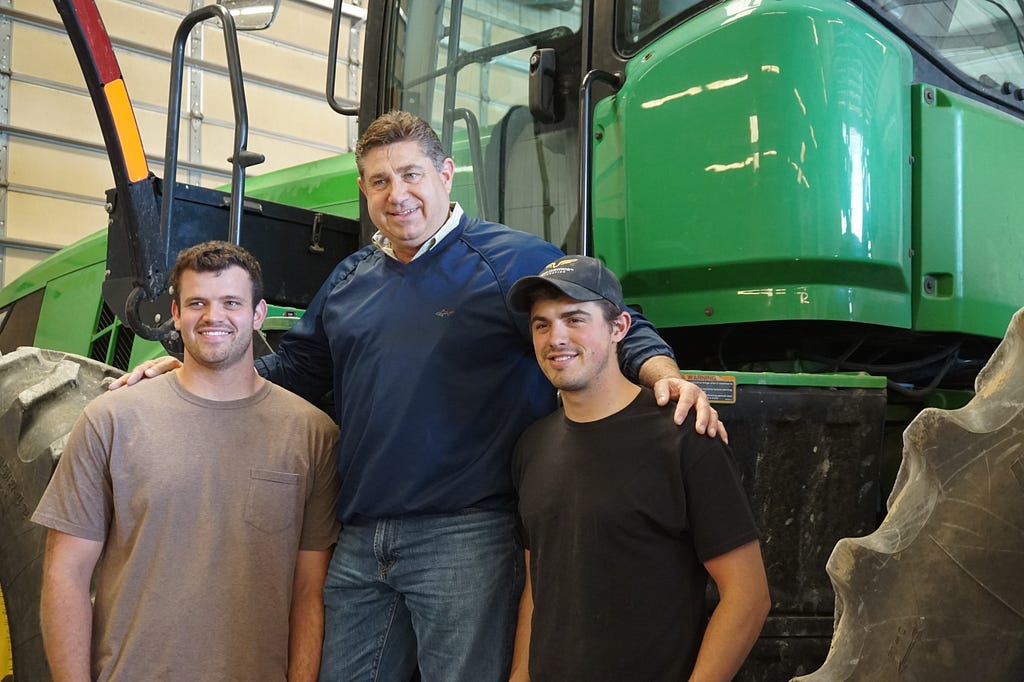
(Left to right) Brian Kurz, David Seba and Blake Seba Fast forward to today
Due to new digital technology that allows us to collect and share a complete set of field data in real-time, we’re literally putting a virtual fence around our farming data. And it’s a really good feeling.
Why is harnessing data so important to our farm operation? Two big reasons: 1) it’s our data, we own it; and 2) controlling our data allows us to create our own income stream.
Better data = better decision-making
Whether we’re planting, spraying or harvesting, we use a new digital system from a company called Farmobile to gather machine and field data in a single platform that is contained within field boundaries. While our equipment is operating, the data is beamed up every second and attached to every field’s Electronic Field Record. This can be viewed any time, any place via mobile device.
We’re looking at doing so many different things with this data — better management of fields, machinery, and people.
It’s a huge deal to have our data gathered on the same type of platform, putting a fence around it, and being able to have it as a potential income stream.
Farming has always been challenging. But it’s so incredibly competitive today. You need to know your costs. You can’t shoot from the hip. You need to know if a given process, input or management practice is more efficient or more profitable than another — then you have to communicate those facts to your team.
The business of farming is full of intangibles (weather, global economy, commodity prices, etc.). The more facts and data you collect, the fewer “what if’s” you have to deal with, and the better decisions you can make.
Here are just a few ways our digital strategy is changing the way we operate.
Operational efficiency
Our ability to collect data truly does help us better manage efficiencies. From a mobile dashboard, my brother and I can remotely monitor what’s happening in the field. In real time, we can assess task efficiency, manpower and fuel hours, input application, all kinds of things.
As an example: Like all farmers, we try to manage as many acres as we can with the fewest machines. The data showed that — during harvest — we were losing valuable daylight run-time while operators waited for the service team to finish refueling and maintaining machines. We rescheduled the service teams to be in the fields earlier so machines would be ready to go when the operators arrived. This one small change bought us 1 to 2 hours of additional daylight time. It increased harvest machine run-time from 92% to 98% of the prime work day.
Little adjustments that open up an hour and a half a day of harvesting time makes a difference in cost, time, yield and quality.
Labor management
Just having the ability to remotely monitor our team is probably one of the biggest assets. We can monitor multiple machines, operations and operators at the same time. Is somebody more efficient than another? Does the staff need more training? Is an operator close to needing fuel? Gathering and then using this kind of data to benefit our team and farming operation is unlimited.
Assessing field profitability
Everybody talks about seed, chemical and fertilizer as keys to profitability. Those are the have-to’s. But how are time, equipment and people resources affecting the profitability of a field? Our digital strategy allows us to look at the complete field data from planting to harvest and make some observations that we would have missed otherwise. For the first time we could actually say, “Wow, here’s a field that we didn’t think did as well, but we made a lot more money per acre because we did less activity there.” As the saying goes, you can’t manage what you can’t measure it. It’s true.
Sharing data
Just the ability to electronically share our data in real-time with our agronomist and team is a time-saver and stress-reducer. For instance, we’ve got an operator who regularly talks to the agronomist while he’s in the field. Basically, via the dashboard, the agronomist can remotely monitor the field work and send input and application changes to the operator. Our data system virtually brings the field to whoever the expert is, wherever they’re at. And the quality of the data means our agronomist can give us better prescriptive solutions.
These are only some of the benefits of having a data strategy. Without a doubt, we’ve only just begun to realize how the information being collected will benefit our business.
My data, my asset, my income
There are tangible benefits today, but we’re only just getting started. In the future, I think there’ll be a place on everybody’s farm balance sheet that will say ‘data income’. And I believe that’s the way it should be. Farmers who own their data and can sell it — on their own terms — will change the face of agriculture.
Today, all ag suppliers and manufacturers, which support farmers, are currently collecting and profiting from farm data. That’s a proven fact. The questions needs to be asked, ‘who is supporting whom?’
Big ag has been collecting our data for so long, that there’s this attitude that the way we farm carries no value. Well, it does. For farmers, the field is our business and the way we manage it is our formula for success. So, why is it okay for someone else to claim and sell it?
We have to change that.
Farmers need to have a digital strategy that puts a fence around their data. Data should be an income stream, the same as any crop. Farmers are doing the work. It’s their data — their formula for farming. Farmers need to control it, and, if it gets sold, profit.
Harold and I are confident we’re on the right path.
Our farms’ digital assets are part of our legacy, tied to the land forever. I’m proud of that.
Literally, by collecting and attaching a complete set of data to every one of our field acres, we are transferring our farming know-how to the next generation. It isn’t guesswork. It’s fact-based data. They’ll know exactly what was successful and what wasn’t on each field.
With every data set collected, we are transferring wisdom. That’s more than a digital strategy. That’s our farm’s legacy.
Why We Put a Fence Around Our Farm Data was originally published in The Dirt on Medium, where people are continuing the conversation by highlighting and responding to this story.
-

Aquaponic Design Plans, Everything You Need to Know: from Backyard to Profitable Business
This 550+ page user-friendly book shows you how to easily produce an abundance of Fresh Organic Produce and Plentiful Healthy Fish. Feed Your Family Healthy Food, Barter and/or Sell Surplus Everything from Beginner Basics to Operating a Profitable Aquaponic Business, Step-by-Step Instructions and SO much more is included in this VALUABLE resource. Expensive university courses…;

Howard PublishingPrice:
$24.93$23.68 Free Shipping
This 550+ page user-friendly book shows you how to easily produce an abundance of Fresh Organic Produce and Plentiful Healthy Fish. Feed Your Family Healthy Food, Barter and/or Sell Surplus Everything from Beginner Basics to Operating a Profitable Aquaponic Business, Step-by-Step Instructions and SO much more is included in this VALUABLE resource. Expensive university courses and lengthy on-site training workshops which cost thousands of dollars do not provide as much valuable material as presented in this comprehensive user-friendly ‘how-to’ book. This how-to resource consists of three important sections: Included are Aquaponic Design Plans, Instructions & Everything You Need to Know about Aquaponics. In addition, this book will show you how to successfully barter and earn extra money from your aquaponic harvest; and even transition your aquaponic operation into a profitable business. Included within this book are design plans, nearly 400 photos and illustrations which show you how to set up and operate different types of aquaponic systems of any size; and how to scale-up in size to produce even more organic vegetables and fish as you desire grow. This book will provide you with everything you need to know so that you can to easily turn your aquaponics operation into a profitable venture. It also has a real-world aquaponics business plan. This book provides detailed directions to create and maintain different types of aquaponic systems of all sizes so you can consistently feed your family environmentally friendly sustainable healthy organic food, substantially lower your food cost, and even earn extra income.
Full Customer Reviews:
-

The Jump-Off Creek
A reading group favorite, The Jump-Off Creek is the unforgettable story of widowed homesteader Lydia Sanderson and her struggles to settle in the mountains of Oregon in the 1890s. “Every gritty line of the story rings true” (Seattle Times) as Molly Gloss delivers an authentic and moving portrait of the American West. “A powerful novel…;

Mariner BooksPrice:
$13.95$13.49 Free Shipping
A reading group favorite, The Jump-Off Creek is the unforgettable story of widowed homesteader Lydia Sanderson and her struggles to settle in the mountains of Oregon in the 1890s. “Every gritty line of the story rings true” (Seattle Times) as Molly Gloss delivers an authentic and moving portrait of the American West. “A powerful novel of struggle and loss” (Dallas Morning News), The Jump-Off Creek gives readers an intimate look at the hardships of frontier life and a courageous woman determined to survive.Paperback with colors of orange and brown – scene of log cabin.
Full Customer Reviews:
-

Rhiannan Price: Achieving a Multi-Spectral Revolution for Agriculture
In this guest blog post, Rhiannan Price, Senior Manager of Digital Globe’s ‘Seeing a Better World‘ program, explains the power of satellite imagery for improving lives of smallholder farmers — and why the next agricultural revolution will be blue, green and red.
In in rural Sub-Saharan Africa, a woman smallholder farmer is faced with tradeoffs every day. She’s responsible for paying her children’s school costs that increase each year. She grows staple crops, but drought and fluctuating weather patterns have wreaked havoc on production. She has no land rights and mostly likely no credit. Meanwhile, every day more people seek safety in her community as they flee violence in neighbouring countries. Should she send her kids to school or have them help out at home? Should she share her limited food reserves with refugees? Should she cut down more of their orchards to cultivate a larger area?
This is a common scenario faced by countless farmers in Uganda, Nigeria or DRC and other countries. These dilemmas are the same as those faced by the global community as it figures out how to achieve the Sustainable Development Goals (SDGs), particularly SDG #2 around ending hunger.
Learn more at www.farmingfirst.org/sdg-toolkit Ending hunger — more so than any other SDG — demands a holistic understanding of the complex systems and linkages across food security, urban growth, gender equality, poverty, conflict and natural resources. How do decisions to increase production affect water resources? Are increases in income prompting male farmers to co-opt traditionally female-led work? Are current interventions going to be obsolete when the next inevitable conflict or a natural disaster completely wipes out farmlands?
We cannot simply double agricultural production and be satisfied that a target was met. We have to consider the tradeoffs. “Sustainable” requires us to think big and long-term. And this may seem daunting, but we have important tools at our disposal that can help us realize the ambitious goal of ending hunger, achieving food security, improving nutrition and promoting sustainable agriculture.
One critical tool is satellite imagery. The next revolution for agriculture will be multispectral — a revolution in blue, green, red, near infrared and short-wave infrared. Satellite imagery can help evaluate tradeoffs across the food production spectrum, whether that be the value chain, the continent or the sector, as well as the nexus of food security, poverty and environmental sustainability. Imagery provides invaluable insights specific to agriculture (think crop yields, crop health), but also about the context of the agricultural system (think enabling environments like road networks, reducing risk for credit). Imagery is also an authoritative information source that provides an incredible return on investment when you leverage all it has to offer. Governments need to take advantage of that, and we need to better communicate that ROI — whether it’s faster access to information, saving costs on surveys, or de-risking private sector investment.
Imagery can address these information gaps while also rallying disparate stakeholders around a common operating picture. What other information source provides value to everyone from scientists to humanitarians to policymakers to extension workers to farmers themselves?
Leveraging imagery is an important tool in the food security toolkit. ICRISAT used DigitalGlobe’s high resolution imagery in Mali to evidence adoption of good agricultural practices. Analyzing crop health at the plot level provides an important insight as to whether or not those farmers were applying the recommended amounts of fertilizer. As you can tell from the image below where red indicates healthy vegetation, the thriving sorghum are those that received the appropriate amount of NPK.
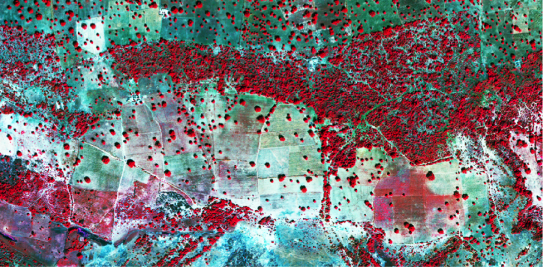
False colour, high-resolution imagery over smallholder fields in Mali. Imagery from DigitalGlobe. 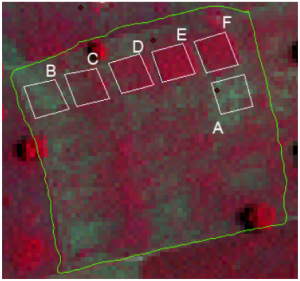
Imagery from Digital Globe, Analysis from ICRISAT The image to the left shows the crop health of sorghum plots with varying levels of fertilizer applied. Red indicates healthy crops. In this example, F has received the recommended fertilizer amount with A, as the control, receiving none.
Another example would be gathering information at the nexus of conflict, population migration and food security. Working with the Famine Early Warning System Network (FEWS NET), DigitalGlobe is identifying permanent settlements, temporary settlements and herds of cattle in South Sudan so the international community can better assess the food security status in the region and make data-driven plans to intervene.
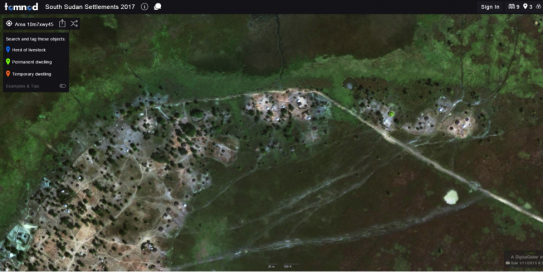
Using the Tomnod crowdsourcing platform, thousands of volunteers across the world are tagging settlements and herds of cattle in South Sudan to support the Famine Early Warning System Network. Want to join the multispectral revolution? Click here to help us map migration in South Sudan to avert a famine.
This post originally appeared on www.farmingfirst.org
-

Sophisticated Farmers Cut Out Trading Giants in Profit Hunt
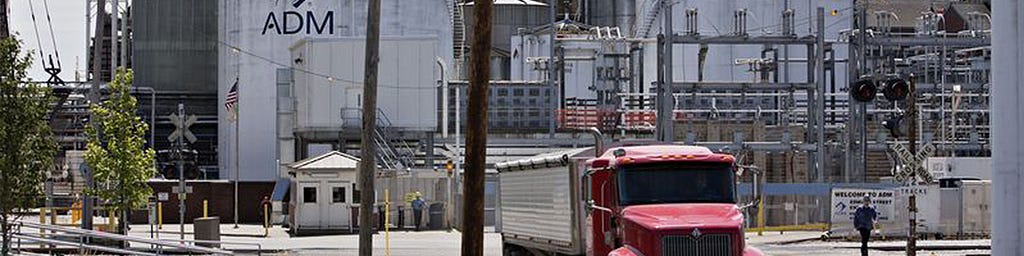
Editor’s note: This post is a summary of “Sophisticated Farmers Cut Out Trading Giants in Profit Hunt,” featured in Bloomberg Technology, by Shruti Singh, Jeff Wilson and Mario Parker, published June 15, 2017. Read the full article here.
Grain marketing business models are shifting with the help of digital and social and enterprising growers like Brian Marshall of Missouri. With the help of smartphones, better data, digital strategies and social networks, growers like Brian and his father, who cultivate 4,000 acres near Kansas City, are cutting the costs and the middleman out of grain storage, drying, transportation and selling. Learn about the potential impact and how grain buyers and sellers are taking notice.
Read the full article here.
Sophisticated Farmers Cut Out Trading Giants in Profit Hunt was originally published in The Dirt on Medium, where people are continuing the conversation by highlighting and responding to this story.
-

The Ultimate Self-Sufficiency Handbook: A Complete Guide to Baking, Crafts, Gardening, Preserving Your Harvest, Raising Animals, and More (The Self-Sufficiency Series)
This compact guide provides advice, tips, and step-by-step instructions for hundreds of projects, offering the entire family the tools they need to make the shift toward self-sufficient living. Readers will learn to dip candles, bake bread, make maple syrup, start a vineyard, and much more. With special features for young homesteaders, this is an essential…;

Skyhorse PublishingPrice: Free
This compact guide provides advice, tips, and step-by-step instructions for hundreds of projects, offering the entire family the tools they need to make the shift toward self-sufficient living. Readers will learn to dip candles, bake bread, make maple syrup, start a vineyard, and much more. With special features for young homesteaders, this is an essential family guide to self-sufficient living.– Bake Pies, Cakes, and Bread
– Grow Vegetables yy Raise Chickens
– Keep Bees
– Preserve Your Harvest
– Cure Meats
– Build a Treehouse
– Spin Wool
– Make a Toboggan
– And Much More!
Full Customer Reviews:
-

5 Ways to Improve Your Farm’s Strategy
Editor’s note: This is a summary of the article “5 Ways to Improve your Farm’s Strategy,” authored by Sara Schafer on AgWeb.com, published May 24, 2017. Read the full story here.
Nothing is easy about charting the strategic direction for a farm — especially in today’s challenge business and financial climate. Sara Schafer, Top Producer editor, compiled speaker highlights from the recent ONE: The Alltech Ideas Conference into top five lessons farmers can apply to their farm’s strategic planning process.
Spoiler alert: The Dirt’s favorite recommendation is №5, adopt a disruptive mindset!
Read the full review here.
-

We Need to Put More Biodiversity on the Sustainable Development Menu
In this guest blog post, Ann Tutwiler, Director General of Bioversity International kicks off our brand new series “SDG2 Countdown”. For five weeks, we will count down to the United Nations’ meeting that will track SDG progress, by exploring the five targets related to SDG2: ending hunger. This week, we explore SDG2.5: protecting genetic diversity. Visit www.farmingfirst.org/SDGs for more.
When the UN announced its Decade of Action on Nutrition in 2016, hot on the heels of the Sustainable Development Goals, many media outlets used a picture of a child eating a bowl of white rice, to illustrate the promise of better nutrition for all.
There’s just one problem. Rice alone is not enough. Yes, it will prevent the most basic form of hunger but rice lacks many of the vitamins and minerals essential for good health.

Photo credit: Wagner T. Cassimiro Without these vitamins and minerals, this child’s growth will be stunted, his immune system weakened, and his intelligence lower than it ought to be, costing him a lifetime of lost income and productivity. That is why the Sustainable Development Goal’s Target 2.1 of “access to safe, nutritious and sufficient food all year round” is so important, because it adds “nutritious” to “sufficient”.
I don’t want to downplay the importance of “sufficient”; we face a great challenge in ensuring enough food for everyone in the face of both climate change and population growth — a challenge that Bioversity International and agricultural biodiversity are helping to meet. For now, though, let’s concentrate on “nutritious” food.
The most important factor in a nutritious diet is diversity. That concept is enshrined in national dietary guidelines around the world, with their advice to eat fruits and vegetables, whole grains, pulses and so on. Research conducted by Bioversity International in collaboration with the Earth Institute shows that increasing food supply diversity is associated with lower levels of acute and chronic child malnutrition (stunting, wasting and underweight) at a national level. Agricultural policies and funding for research, however, generally focus on the four or five commodity staples that supply the bulk of calories. From the 5,538 known plant species, just three — rice, wheat and maize — provide more than 50% of the world’s plant-derived calories.

And although people may be aware that they should make healthier choices, the food system that surrounds them — which is the product of both food industry and government policy — often makes it difficult to choose a more diverse and more nutritious diet.
Nutritious staples
One successful approach is to diversify staples — mainstay foods — in the diet to include more nutritious alternatives.
For example, bananas are the fourth most important food crop in Africa, which is also home to high levels of vitamin A deficiency, a major public health problem in many developing countries. Every year, a half a million children go blind from the lack of vitamin A, and half of those die from infections.
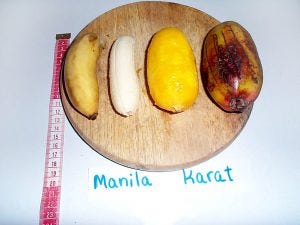
Orange-fleshed Fe’i bananas from the Pacific. Photo credit: Bioversity International ‘Mining’ banana diversity to find varieties with a higher content of vitamin A could be part of the solution. It is estimated that there are over 1,000 varieties of bananas in the world, which range from green to pale yellow to orange to dark red. The genetic diversity in these varieties determines not just these differences you can see and taste, they also determine micronutrient levels. For example, the orange-fleshed. Karat banana contains 1,000 times more of the pigment which the human body can convert into vitamin A (carotenoids) than the Cavendish banana, which is the variety of bananas most Western consumers see in their supermarkets.
Bioversity International is conducting research with partners in Burundi and the Democratic Republic of Congo (DRC) to see how using this banana diversity can help increase the levels of vitamin A in diets.
In India, we are also working to bring different kinds of nutritious and resilient millets, which were once part of traditional diets, back to plates and markets. While widespread famine in India is a thing of the past, malnutrition is not. India has high levels of stunting in young children and, by contrast, equally high levels of overweight, obesity and illnesses such as heart disease and diabetes.

Children in Kolli Hills enjoy eating millets. Photo credit: Bioversity International/ G. Meldrum Foxtail millet, for example, contains almost twice the protein of white rice, and little millet almost nine times the iron. In just three months of replacing white rice with millets in school meals, children gained weight and had improved haemoglobin levels.
Results such as these, and many more from Bioversity International’s work on neglected and underutilized species, helped prompt the national and state authorities in India to amend their food legislation. Millets are now included in some state school feeding programmes and have been incorporated in the national public distribution system. This is obviously a good thing for the poorer and nutritionally vulnerable people who receive subsidised food, and it also benefits the farmers who grow millet, which is much less ecologically demanding than other staples. Nutrition, local economies, the environment and food security: all thus gain from expanding the diversity of diet.
We can do it
There is no single solution to combat malnutrition, but using more diverse crops and varieties in our fields and on our plates must be part of the solution.
To make this a reality, we need to take action at multiple levels. Consumers can influence production by choosing nutritious, fresh, local and diverse foods. Agricultural research should increase knowledge on the use of agrobiodiversity to make farming systems more nutritious, resilient and sustainable. Governments can make the difference by creating food and agricultural policies that promote and integrate agrobiodiversity as an essential tool to achieve multiple Sustainable Development Goals.
Use #Ag4SDGs to search for more content and share your own biodiversity stories on Twitter!
-

The Dirt on Data Ownership
A Look into Data Privacy, Ownership and Security on the Farm
Editor’s note: This post was provided by By Ben Craker, Product Manager, Global Fuse: Data Partnerships & Standards, AGCO

Ben Craker, Global Fuse, AGCO Farmers want to embrace technologies to work smarter not harder. However, they want to understand how their precious farm data is being protected and stored and validation that they own it.
A recent research report from the Rabo Bank Food & Ag research group has highlighted some of the key hurdles to the adoption of precision farming, also referred to as digital agriculture. The report recognizes digital ag as the most promising innovation to the agriculture industry.
One of the biggest issues preventing adoption is data ownership and control.
A Complicated Web of Data
In several surveys and other research efforts, growers repeatedly cite concerns over sharing data with 3rd parties as a main reason they are not comfortable using new products and services resulting in much of the data collected going unused. The issue of data ownership may seem pretty simple and straightforward, but there are many layers to dig through.
Many companies agree with the “Principles of Data Privacy and Security” drafted by a group led by the Farm Bureau. These principles state the farmer owns the data generated from his farm. However, this can get complicated quite quickly.
For example, Farmer Joe runs a mid-sized farming operation. He rents land from Bill and has the local cooperative handle all his fertilizer and pesticide applications for the rented field. In this situation, who owns the data generated on that rented field?
- Does Joe have rights to all the data since he is the one “farming” the field and it’s his “secret sauce” on what rates he is applying the various products and when? Or, does Bill the landowner have rights to all the data since he owns the actual land?
- Finally, does the co-op have the rights to the application records generated by their sprayer, or do they have an obligation to provide that data to Joe or Bill? And what data sharing can the co-op do if they are using a 3rd party software tool to generate prescriptions or wirelessly transfer data to and from the machines?
Generally this should all be covered in the agreements between these parties as suggested in this AgLaw blog post. Bill should have his expectations for access to the data laid out in the rental agreement. Farmer Joe should have something included in the custom application agreement with the co-op on what happens to the data generated by the machines and what software tools they will use to create and manage any variable rate files.
This is a new way of thinking for farmers. They have never had to consider including data from field operations in agreements that historically were made with a handshake.
These issues are not impossible to overcome, but must be sorted out to really enable the next revolution in the ag industry to take place based on the use of all of this data. Other industries are also working to figure this out, providing lessons the ag industry can learn from.
The Power of Big Data
For example, BMW recently announced a portal enabling the drivers of their vehicles to share information generated by their cars with different third parties. Initially this might just help good drivers get better insurance rates, but it is not too far off to consider customized “info-tainment” and other tailored services offered to drivers based on their particular habits behind the wheel when that data is available for others to analyze.
This is very similar to a farmer enabling a dealer, OEM, or other service provider to help monitor and manage their fleet of equipment using a telemetry system not that different from what BMW is offering. The BMW article clearly points out the driver is in control of the data and has direct control over who it is shared with and when. Additionally, the data is securely stored with only permissioned access, something that is common with how many of the telematics systems in the agriculture industry function as well.
Another great example to look at is in a recent Economist article about how companies like Google, Amazon, Uber and others are using data. Clearly there is an advantage to getting access to data and providing a better value added service back to the data generators. Due to the nature of how these services are based on algorithms that can “learn”, often it is the system with the most data that wins. This clearly translates to the ag industry and the number of startups and even established companies that are working to get as many acres as possible into their systems. The more data they have to fine tune their algorithms, the better their services get. This should, in turn, drive more users of their now improved services which will again make their services better with more data and so on.
The article proposes an interesting idea that some of the big companies like Google and Facebook are able to access so much data they may actually be operating similarly to the oil empires that were eventually broken up by the government’s antitrust watchdogs. This will be an interesting space to watch as these agencies begin to navigate this new area. The article even suggests that publicly-owned and controlled data sets may be needed to ensure competitiveness so the large companies do not squash out competition simply due to the fact they have access to more data.
Consumers may also need to band together to form data cooperatives to help strengthen their position with these large tech companies. We are already seeing this concept within the ag industry with groups like the Ag Data Coalition advocating for farmers to have an independent data storage system they control.
The potential for better-informed decision making driven by data is pretty clear within the ag industry. There are hurdles to overcome but we have other industries to watch and learn from. The future for precision ag and farming in general is bright. There will undoubtedly be a few stumbling blocks along the way, but I am excited to see how our industry continues to digitize and grow.
The Dirt on Data Ownership was originally published in The Dirt on Medium, where people are continuing the conversation by highlighting and responding to this story.
-

Tiny Oregon ‘ghost town’ may be reborn as a permaculture school

Buyers of the town of Tiller, Oregon have plans to turn it into a campus with a focus on teaching permaculture. (Photo: Landleader.com)
Tiller, Oregon, a small town built at the turn of the 20th century on the fortunes of the timber industry, may soon become a beacon for a more sustainable future.
Located in the sprawling Umpqua National Forest, Tiller went from virtual unknown to international star earlier this spring after it was listed for $3.85 million. Included in the sale is 257 acres with 28 tax lots, multiple domestic and agricultural community water rights, six houses, the shuttered local market, a gas station, and associated infrastructure like sidewalks and fire hydrants. There’s also nearly a mile of scenic waterfront along the South Umpqua River and Elk Creek. The local elementary school, which closed in 2014, is available separately for $350,000.
You can see a promotional video detailing both the town’s history and sale below.
“The new owners of this extraordinary opportunity will find the ability to structure a wide variety of different zonings, tax lots, structures and natural resources into a prosperous future along the natural flowing South Umpqua River,” the narrator says over drone footage of the town’s natural beauty. “The region has a vast variety of fish and wildlife abound. And recreational options rivaled by none.”
According to the AP, Tiller’s decline occurred roughly three decades ago in the wake of environmental regulations that effectively limited timber production in the forests surrounding the town. As jobs dried up and families moved away, one local resident began buying up properties. When that individual passed away several years ago, much of the town was tied up with the deceased’s estate.
“Between the dying economy and the dying owners, Tiller became a new opportunity that had never been available before,” Richard Caswell, executor of the estate, told the AP. “I started getting inquiries from all over the world, essentially, ‘What was it? And what could you do with it?’ It’s the buyer and their imagination that’s going to determine what Tiller can become.”
Deciding the next chapter for Tiller
 The shuttered Tiller Market was once a hub for the more than 250 residents who lived in the region. (Photo: Landleader.com)
Immediately after the listing for the town went viral, realty agent Garrett Zoller says interest began pouring in. Speaking with Oregon Live, he said the pitches included everything from developing the site into a senior care facility to a fishing retreat and even a hemp production hub.
The first buyers to get the town under contract, however, was a couple from Oregon in the nearby town of Ashland. Zoller won’t yet say who they are, hinting at a larger unveiling sometime in the next few weeks, but he did reveal that they are involved in an industry and have “grand plans” for the site. They also intend to turn the school into a campus with a focus on permaculture.
“He said the plan is to help people get back to the land in an area with a long growing season and productive soils,” Oregon Live reported, adding that the buyers have financial backing from California to make it a reality.
 Tiller’s natural beauty, long exploited for timber, may soon support a more sustainable industry. (Photo: Landleader.com)
A quick search of permaculture businesses in Ashland turned up a number of firms, including the nonprofit Southern Oregon Permaculture Institute. Could this group possibly be planning a big expansion into Tiller?
Whatever entity steps forward to breathe new life into the town, Zoller says the forces behind it are intent on making the transition as welcoming to nearby residents as possible.
“They realize they have one shot at making a first good impression,” he added to Oregon Live. “I think people will be happy. There will not be dynamic change. No NASCAR raceway.”
Related topics:Education,Sustainable GardeningOn – 19 Aug, 2017 By Michael d’Estries